 At Copperhill Technologies, we are thrilled to offer developers, engineers, and hobbyists an exciting opportunity: a fully functional, free-of-charge SAE J1939 protocol stack designed specifically for the ESP32 platform!
This contribution to the engineering community is part of our long-standing mission to make advanced embedded systems development more accessible, flexible, and affordable for all. If you’re working with CAN Bus networks and the SAE J1939 protocol, our protocol stack opens the door to professional-level functionality — without any licensing fees or proprietary restrictions.
✅ 100% Free – Professional-Grade SAE J1939 Functionality for ESP32
In the world of CAN Bus development, protocol stacks typically come with hefty licensing costs or restrictive usage terms. That’s not the case here.
The SAE J1939 protocol stack for ESP32 is completely free of charge, offering a rare opportunity for students, developers, and companies alike to prototype, experiment, and deploy without worrying about additional expenses.
-
Zero licensing fees – perfect for hobbyists, startups, and research.
-
Comprehensive functionality – covering address claiming, transport protocol (BAM & RTS/CTS), request messages, and full PGN support.
-
Ideal for rapid prototyping – build real-world applications such as vehicle bus simulators, gateways, and diagnostic tools.
This stack is meant for educational and demonstration purposes, but its robustness easily extends to practical, real-world applications.
⚙️ Compatible With Any ESP32 Development Board – True Flexibility
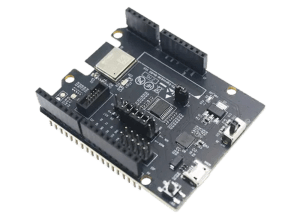
While the testing and demonstration of the code were performed using our ESP32 WiFi, Bluetooth Classic, BLE, and CAN Bus module, we made sure that the SAE J1939 sketch is not locked to any specific hardware.
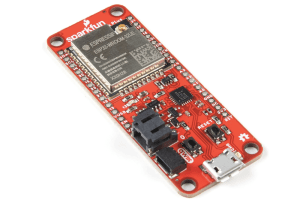
You can use it with virtually any ESP32 development board — whether it’s an ESP32-DevKitC, ESP32-WROOM-32, ESP32-S3, or any other variant.
🛠 Important Note:
Since hardware layouts can differ slightly between ESP32 modules, you may need to adjust the SPI signal pin assignments to match your specific hardware setup.
This simple adjustment ensures that your CAN Bus transceiver communicates correctly with the ESP32 controller.
In short: If it’s an ESP32, you’re good to go – just customize a few lines of code if necessary.
🚀 Optimized CAN Bus Driver for Reliable J1939 Communication
Implementing SAE J1939 over CAN Bus requires more than just sending and receiving packets. Reliability and error handling are critical, especially in industrial or automotive environments.
Our protocol stack includes an improved CAN Bus driver, based on publicly available sources but heavily modified for robustness:
-
Enhanced Error Handling: The software actively monitors error counters and can reset the CAN controller if it enters the Bus-Off state, ensuring reliable, uninterrupted communication.
-
Full Transport Protocol Support: Including broadcast (BAM) and peer-to-peer (RTS/CTS) message transmission, essential for longer messages across the CAN network.
This results in a development platform that’s stable, predictable, and ready for complex J1939 applications.
📚 Further Learning: Deep Dive With Our Comprehensive Textbook
For developers looking to go even further, we recommend the accompanying textbook:
“SAE J1939 ECU Programming & Vehicle Bus Simulation with Arduino”.
This detailed guide offers:
-
Extensive coverage of J1939 protocol internals
-
Practical programming examples using Arduino IDE
-
Step-by-step project builds like a J1939 data logger and CAN network scanner
-
Detailed description of the protocol stack’s internal functions
Whether you’re an engineer, student, or hobbyist, this book will serve as a reliable, practical reference.
👉 Learn more about the textbook here.
💡 Ideal Applications
Thanks to the flexibility of the ESP32 and the feature-rich SAE J1939 stack, you can quickly and efficiently build:
-
J1939-to-USB converters and gateways
-
Vehicle network scanners
-
Fleet telematics applications
-
Diagnostic tools for heavy-duty vehicles
-
Bus monitoring and logging systems
-
J1939 simulators for laboratory or field testing
Combined with the ESP32’s wireless capabilities (WiFi and Bluetooth), you could even extend your applications into remote monitoring or IoT integration.
📥 Get Started Today – Build Your Own J1939 Application!
Don’t miss this opportunity to leverage a free, high-quality, ready-to-run SAE J1939 stack for your next project.
-
Download the complete example sketch and source code from our website.
-
Compile and upload using the Arduino IDE.
-
Connect your ESP32 development board and start experimenting with J1939 networks right away!
👉 Access the Free Stack and Tutorial
Note:
This free software is provided “as is” for educational and demonstration purposes. It is a perfect starting point for your development journey, but commercial deployments may require additional robustness validation.
🏁 Summary
Copperhill Technologies proudly offers this free-of-charge SAE J1939 protocol stack for the ESP32 community. It’s versatile, easy to use, and a strong foundation for a wide variety of CAN Bus projects — from simple network scanning to complex vehicular control systems.
Take control of your development path — without licensing fees, without vendor lock-in, and without compromises.
 ESP32 WiFi, Bluetooth Classic, BLE, CAN Bus Module
This compact and highly versatile development board features an onboard ESP32-WROOM-32 module, integrating Wi-Fi, Bluetooth Classic, and BLE capabilities alongside a fully functional CAN Bus interface with transceiver. Designed for robust communication in automotive, industrial, and IoT environments, this board combines wireless connectivity and wired CAN networking on a single, powerful platform.
The board also includes an RGB status LED, clearly labeled I/O pins on 0.1″ headers for rapid prototyping, and a USB-C connector for convenient programming and serial communication. An automatic bootloader and reset circuitry ensure a smooth development experience. More information…