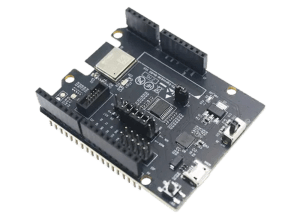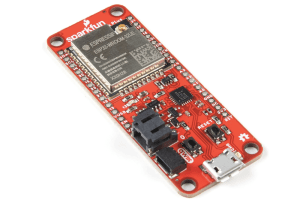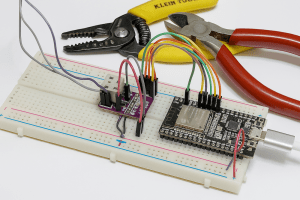
 This post represents a comprehensive technical report on four advanced ESP32-based development boards from Copperhill Technologies. These boards are part of the espBerry series and are designed for robust industrial, automotive, marine, and IoT applications. All of them combine the processing and wireless communication capabilities of the ESP32 with the Raspberry Pi 40-pin GPIO header, allowing the use of a wide range of HATs (Hardware Attached on Top).
1. ESP32 Development Board with CAN FD and RTC HAT
Overview: This board integrates the ESP32-DevKitC with a HAT that supports CAN FD (Flexible Data-rate) communication and an onboard Real-Time Clock (RTC). The combination is ideal for high-speed, time-sensitive applications such as automotive diagnostics, industrial automation, and CAN-based data logging systems.
Key Features:
-
CAN FD Controller: Based on the MCP2517FD via SPI interface.
-
CAN Transceiver: Supports flexible data rates (up to 8 Mbps).
-
RTC Module: Equipped with a DS3231 RTC, battery-backed to ensure timekeeping during power loss.
-
ESP32 Capabilities:
-
Dual-core 32-bit Xtensa processor @ 240 MHz
-
Integrated Wi-Fi 802.11 b/g/n (2.4 GHz)
-
Bluetooth v4.2 (Classic + BLE)
-
520 KB SRAM, 448 KB ROM
-
Programmable via USB
-
-
Power Input: 5 VDC via 5.5mm barrel jack with reverse polarity protection.
-
Use Case: Suitable for CAN FD test setups, vehicle bus monitoring, industrial networks, and timestamped data acquisition.
2. ESP32 Development Board with NMEA 2000 & NMEA 0183 HAT
Overview: This model is designed specifically for marine applications, combining support for both legacy NMEA 0183 (serial communication) and modern NMEA 2000 (CAN-based) marine networking protocols.
Key Features:
-
NMEA 2000 Interface: Powered by MCP2562 CAN transceiver, compliant with ISO 11898-2.
-
NMEA 0183 Interface: Uses UART communication through isolated RS422 transceivers.
-
Electrical Isolation: Built-in galvanic isolation protects marine equipment from ground loops and power surges.
-
ESP32 Capabilities: Same core specs as other espBerry boards.
-
Compatibility: Works seamlessly with devices like chart plotters, GPS, depth sensors, autopilots, and AIS receivers.
-
Use Case: Ideal for developers building marine gateways, data loggers, or wireless telemetry systems on boats.
3. ESP32 Development Board with Raspberry Pi GPIO
Overview: This is the most general-purpose board in the lineup. It simply adds a Raspberry Pi-compatible 40-pin GPIO header to the ESP32-DevKitC, enabling users to interface the ESP32 with any existing Raspberry Pi HAT.
Key Features:
-
GPIO Header:
-
20 GPIO pins
-
2 x SPI, 1 x UART
-
1 x I2C, Power & Ground lines
-
-
Flexible HAT Integration: Allows stacking of any Raspberry Pi HATs for rapid prototyping.
-
Connectivity: Wi-Fi, BLE, USB programming, etc.
-
Power Input: 5 VDC with protection.
-
Use Case: Great for IoT experimentation, rapid prototyping, or extending ESP32 projects with RPi HATs like sensors, displays, relays, etc.
4. ESP32 Development Board with Dual Isolated CAN Bus HAT
Overview: This board is tailored for applications requiring simultaneous dual CAN communication, with high electrical noise immunity through galvanic isolation. It’s ideal for automotive, robotics, industrial machinery, and fleet management systems.
Key Features:
-
Dual CAN Bus Channels: Two fully independent CAN interfaces.
-
Isolation: Both CAN interfaces are electrically isolated, preventing signal interference and damage from voltage spikes.
-
CAN Controller/Transceivers:
-
Likely uses MCP2515 or MCP2517FD (CAN FD support varies by variant).
-
-
ESP32 Features: Full wireless connectivity and dual-core processing.
-
Software: Arduino IDE supported; compatible with multiple CAN libraries.
-
Use Case: Ideal for building CAN gateways, monitoring and logging from two networks, or bridging different protocols (e.g., CAN + Bluetooth).
Summary Comparison Table
| Feature / Model | CAN FD & RTC | NMEA 2000 & 0183 | RPi GPIO | Dual CAN (Isolated) |
|---|---|---|---|---|
| CAN Support | Yes (FD) | Yes (NMEA 2000) | No | Yes (Dual CAN) |
| RTC | Yes | No | No | No |
| Electrical Isolation | No | No | No | Yes |
| Target Industry | Automotive, Industrial | Marine | IoT, General Dev | Automotive, Robotics |
| GPIO Header | Yes | Yes | Yes | Yes |
Software & Development Environment
All these boards support:
-
Arduino IDE (open-source libraries and examples)
-
ESP-IDF (Espressif’s native framework)
-
PlatformIO
-
Custom firmware via USB
They can run MQTT, HTTP(S), WebSocket servers, or Bluetooth applications and are ideal for edge computing nodes in IoT deployments.
 Programming ESP32: Learn MicroPython Coding and Electronics
This book offers a hands-on introduction to Python programming and basic electronics, making no assumptions about your prior experience. It begins with the fundamentals of Python, gradually guiding you through to more advanced concepts using a practical Morse Code project as your starting point.
Focusing primarily on the popular ESP32 Lite and ESP32 DevKit 1 boards, the book includes clear breadboard layouts and detailed instructions tailored for both. You’ll learn how to flash Python firmware onto your ESP32, set up and use the Thonny Python editor, and upload your programs with ease.
As you progress, you’ll develop the skills to write structured Python code using functions and modules, work with powerful features like lists and dictionaries, and interface with sensors, LEDs, displays, and servomotors. Finally, you’ll unlock the ESP32’s Wi-Fi capabilities, learning how to turn your board into a web server or connect it to online web services. More information…